

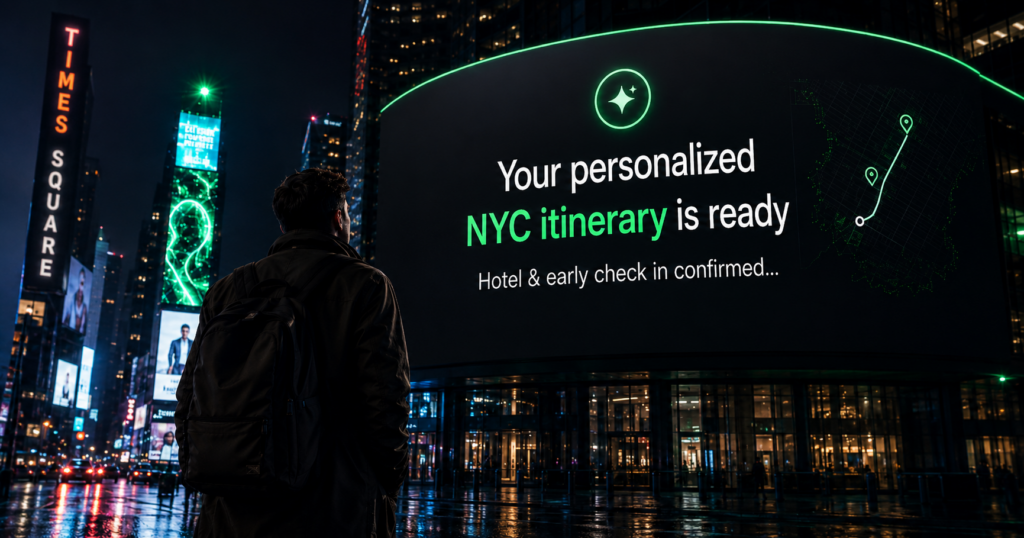
Google’s AI Search Changes: What They Mean for Tourism Marketers
On May 19, Google announced what it calls the biggest upgrade to the Search box in more than 25 years. The short version: Search is becoming less like a list of links and more like an AI-powered planning assistant. For tourism marketers, that is a big deal.
This is not the death of SEO. It is not the end of paid search. But it is a clear sign that destination marketers, hotel groups, attractions, event venues, tour operators, and tourism businesses need to think differently about how people will discover, compare, and choose travel experiences.
Summary: The top 3 changes tourism marketers should expect
- Search is becoming a conversational, multimodal AI interface. People will increasingly search with full questions, images, files, videos, and follow-ups, not just short keyword phrases.
- Search is becoming agentic. Google is moving toward Search that can monitor, compare, recommend, and help users take action, including booking local experiences and services.
- Search is becoming more personalized and interactive. Results may include custom layouts, dashboards, trackers, tables, maps, and “mini apps” built around the user’s task or personal context.
What Google announced
Google says its new AI-powered Search box is designed for longer, more natural questions. It can accept text, images, files, videos, and Chrome tabs as inputs. Google is also making it easier for users to move from an AI Overview into a conversational AI Mode experience while keeping context from the original query.
For tourism, that means Search may increasingly look like trip planning, not keyword lookup.
A traveller may ask:
“Plan a four-day World Cup trip to Toronto, Dallas, or Mexico City with match-day activities, restaurants near the stadium, a hotel under $300 a night, and one family-friendly activity on the off day.”
That is very different from: “Toronto hotels World Cup” or “things to do near stadium Mexico City.”
Google’s AI will be looking for content that answers the full travel scenario, not just pages that contain a few matching keywords.
1. Conversational and multimodal search will change SEO
The old SEO model was built around short searches and matching pages to keyword intent. The new model is closer to natural trip-planning conversations. Google says users will be able to search across modalities and ask follow-up questions from AI Overviews into AI Mode.
For tourism marketers, this means content needs to become more useful, more complete, and more structured around real traveller needs.
Instead of only building pages around phrases like:
- “things to do in Toronto”
- “best hotels in Vancouver”
- “Mexico City tours”
Tourism brands should also create content that answers fuller questions:
- “How should a family spend three days in Vancouver during a major sports event?”
- “Where should international soccer fans stay in Mexico City if they want easy transit, good food, and cultural attractions?”
- “What can visitors do in New York or New Jersey between World Cup matches?”
This is not just blog content. It affects landing pages, event pages, hotel and venue content, attraction listings, itinerary pages, FAQ sections, package pages, and partner referral pages.
The destination or tourism operator that gives Google’s AI the clearest, freshest, most useful answer has a better chance of being included in the AI-assisted result.
2. Search agents will affect both SEO and SEM
Google is introducing Search agents that can monitor the web in the background and notify users when something matches their criteria. It is also expanding agentic booking for local experiences and services, where users describe what they want and Search brings back pricing, availability, and direct booking links.
For tourism, this could change the moment of influence.
A future traveller might ask Google:
“Watch for a good long weekend in a World Cup host city where I can see a match, stay near transit, find a highly rated local restaurant, and add one outdoor activity if the weather is good.”
Or:
“Let me know when there is a hotel package in a Canadian host city that includes family activities, easy airport access, and availability during match week.”
That means tourism brands may be competing to be included in an AI-generated shortlist before the visitor ever sees a traditional search result.
SEO implication
Tourism websites need clean, current, crawlable information. That includes:
- events
- packages
- hours and locations
- pricing and availability cues
- accessibility, transit, and parking information
- booking paths
If the content is vague, stale, buried in a PDF, locked inside an image, or hard to crawl, it is less useful to an AI agent.
SEM implication
Paid search should be built around intent, not just keywords.
Campaigns and landing pages should map to planning scenarios such as:
- “World Cup weekend packages”
- “family trip during match week”
- “hotels near transit for major events”
- “things to do between games”
- “group travel for sports fans”
This does not mean keyword targeting goes away. It means the keyword is only part of the job. The landing page, ad copy, conversion path, and measurement setup need to match the full reason someone is searching.
3. Personalized and interactive Search will make measurement messier
Google is also expanding Personal Intelligence in AI Mode. Users can choose to connect apps such as Gmail and Google Photos, with Calendar coming soon. Google says this is designed around user choice and control, but the direction is clear: Search will increasingly understand personal context.
Google also announced agentic coding in Search, where Search can generate custom layouts, visual tools, simulations, tables, graphs, dashboards, trackers, and task-specific “mini apps.”
For tourism, a search for a trip may not return the same experience for everyone.
One person may see a generated itinerary. Another may see a hotel and attraction comparison table. Another may get a personalized trip-planning dashboard based on dates, interests, location, weather, saved emails, or calendar availability.
Imagine three people searching around the same World Cup host city:
- A family may get kid-friendly attractions, transit tips, and budget hotels.
- A couple may get restaurants, nightlife, and boutique accommodations.
- A corporate planner may get venues, room blocks, airport access, and off-site activity ideas.
That makes traditional rank tracking less complete. Ranking reports still matter, but they will not tell the whole story.
Tourism marketers should focus more heavily on outcomes:
- visits to key itinerary and event pages
- package clicks
- accommodation and attraction referrals
- booking starts and completed bookings
- RFP submissions
- paid search and assisted conversions
The measurement question shifts from “Where do we rank for this keyword?” to “Are we being discovered, selected, and acted on when people plan real trips?”
What tourism marketers should do next
For SEO, build useful, structured, scenario-based content that answers real traveller and planner questions. The winners will not be the sites with the most generic destination copy. They will be the sites that help people make decisions.
For SEM, keep search campaigns active, but align campaigns, landing pages, and conversion tracking to full intent: plan a trip, choose a destination, compare packages, submit an RFP, book an experience, or find things to do during a major event.
For tourism specifically, make your destination, hotel, attraction, venue, or experience easy for AI to recommend.
That means:
- fresh event content
- clear itinerary content
- strong structured data
- useful FAQs
- fast, mobile-friendly pages
- clear booking and referral paths
- accurate local information
- content for different traveler types
The tourism brands that adapt fastest will have an advantage. Not because AI Search replaces good marketing, but because it rewards the same thing good marketing has always required: clear answers, useful experiences, and a strong understanding of what travelers are really trying to do.
And if that sounds like a lot, fear not, we’re here to help. Hit that contact us page and behave accordingly.